
WORLD’S MOST INFLUENTIAL BUSINESS LEADERS 2026
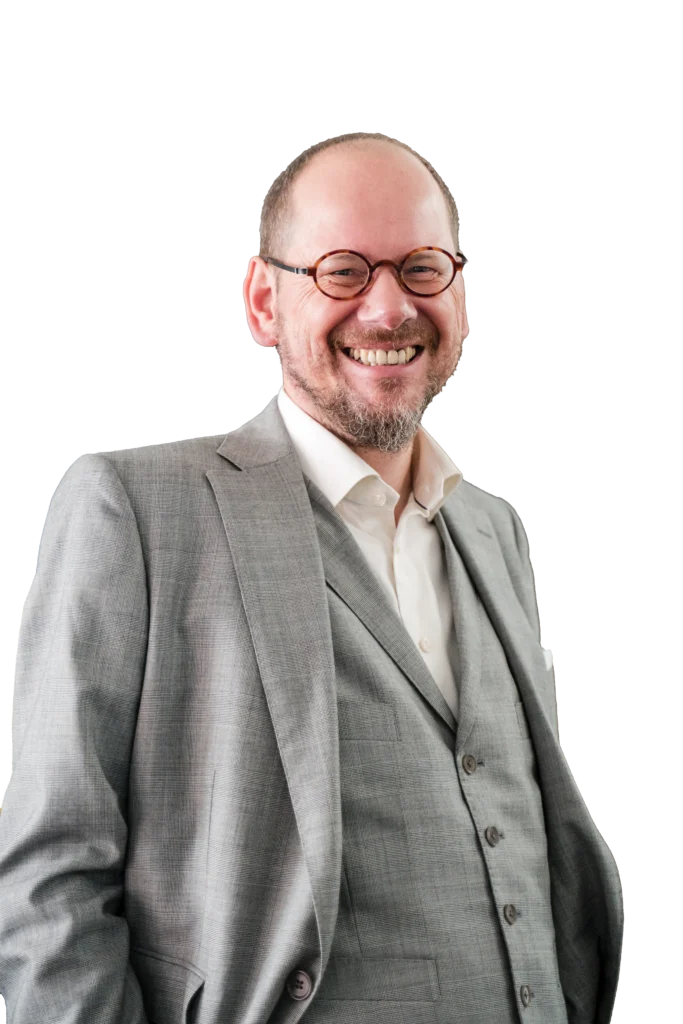
Matthias Lachmann
Lachmann Consulting
Matthias Lachmann
Expert in transformation and organisational development in IT-related companies, Lachmann Consulting
Matthias Lachmann is a highly experienced person known for his expertise in transformation and organisational development, within IT-related companies. He is self-employed sole trader who has built Lachmann Consulting. He has built a reputation for helping organizations navigate change, improve internal structures and align business strategies with evolving technological demands.
He has a strong understanding of leadership, digital transformation and organizational growth. He has worked closely with companies to create more adaptive and future-ready work environments.
Matthias has focused on supporting businesses in managing complex transitions and strengthening organizational efficiency in an increasingly digital world. His professional journey reflects a deep commitment to innovation, people-centric leadership and sustainable business development.
Ques. What inspired you to build a career in transformation and organisational development?
Ans. I studied social pedagogy with a focus on sociology and philosophy, and spent a great time engaging with Niklas Luhmann’s systems theory. At first glance, that seems a long way from IT and product management. But it is precisely this systems-based thinking that became the key to my work. When I was tasked at ‘SOS Children’s Village’ (Germany) with rolling out a centralised pedagogical software solution, I quickly realised that the real problem was not the technology itself.
Rather, it was that 46 sites operating with a variety of isolated legacy systems power struggles between departments were blocking collaboration, and there was no shared data foundation. I had to understand the entire system before I could change anything. An external project manager told me at the time that I had effectively been acting as an internal product manager without knowing it. I believe in inspiring and motivating people through clarity, so that they enjoy driving change together.
“YOU DON’T JUST PROVIDE THE SOLUTIONS TO THE PROBLEM BUT ALSO UNDERSTAND ITS ROOT CAUSE”
Ques. What pivotal experiences or insights influenced your decision to pursue a career in transformation management and organizational development?
Ans. Two experiences were decisive. The first was at MICOS in Oldenburg, a provider of ERP software for the social-services sector. I was brought in to strengthen a pedagogical software product in the market. After my analysis it was clear that the product could not be developed further because it was built on administrative logic rather than pedagogical logic. My line manager wanted to stick with the existing system. I was convinced that only a complete redesign made sense. It came to a confrontation, and the managing director sent me to the home office to draft a product vision and concept. The result, a documentation catalogue based on the Deming cycle, was accepted and went on to become the best-selling product for both existing and new customer acquisition. The second experience was an interim mandate at a software company in Austria, where I helped transform from a project-driven to a product-driven organisation.
Ques. Which leadership principles or personal attributes have played the most significant role in shaping your professional growth and decision-making?
Ans. My CliftonStrengths profile (Gallup Clifton Strengths Assessment, cf. Rath, 2007, Gallup Press) captures it well: Arranger, Achiever, Individualization, Activator and Input. I looked for the best arrangement of people roles and resources for the situation at hand. A good example is the “Product Triangle”, a decision-making triad of Product Manager, Software Architect and Product Owner. I first developed it at the Haufe Group, refined it further at Lowel, put it into practice at a mandate in Austria, and most recently standardised it at Europcar.
At Lowell, I also recruited and coached six junior product managers, looking at each individual profile to identify where their strengths lay. That is individualization in leadership. My most important principle, however, is: analyse root causes, not symptoms. I codified that approach methodologically in the Root Cause Action Framework and published it as a book.
Ques. In an increasingly AI-driven and interconnected world, what fundamental shifts do you foresee in the future of organizational development?
Ans. First, AI will not replace the product manager’s role but will radically redefine it. Routine tasks such as market analyses, competitive benchmarking or drafting requirement documents will increasingly be handled by AI tools. I already use AI tools like Claude intensively in my day-to-day work, for example in business-model development, requirements analysis or prototyping. Third, the EU Cyber Resilience Act and comparable regulation will fundamentally change how software is developed. Compliance will shift from a peripheral task to an integral part of product management.
Ques. What inspired you to work independently for Lachmann consulting and tell some lessons you have learnt in your business journey?
Ans. Going self-employed in 2017 was a deliberate decision. After my time as Head of Product Management at the Haufe Group in the Real Estate division, I had recognised a clear pattern over the years: the companies that brought me in needed someone who would challenge existing structures, professionalise product management and guide teams through phases of change. Every transformation has its own pace, and the pace is not set by the consultant but by the organisation. For one client, I facilitated a vision workshop based on Simon Sinek’s Golden Circle.
“METHODOLOGY WITHOUT AN UNDERSTANDING OF PEOPLE IS WORTHLESS”


