Reserve Bank of Australia Raises Rates to 3.85% on Inflation
RBA Tightens on Inflation; More Hikes Possible
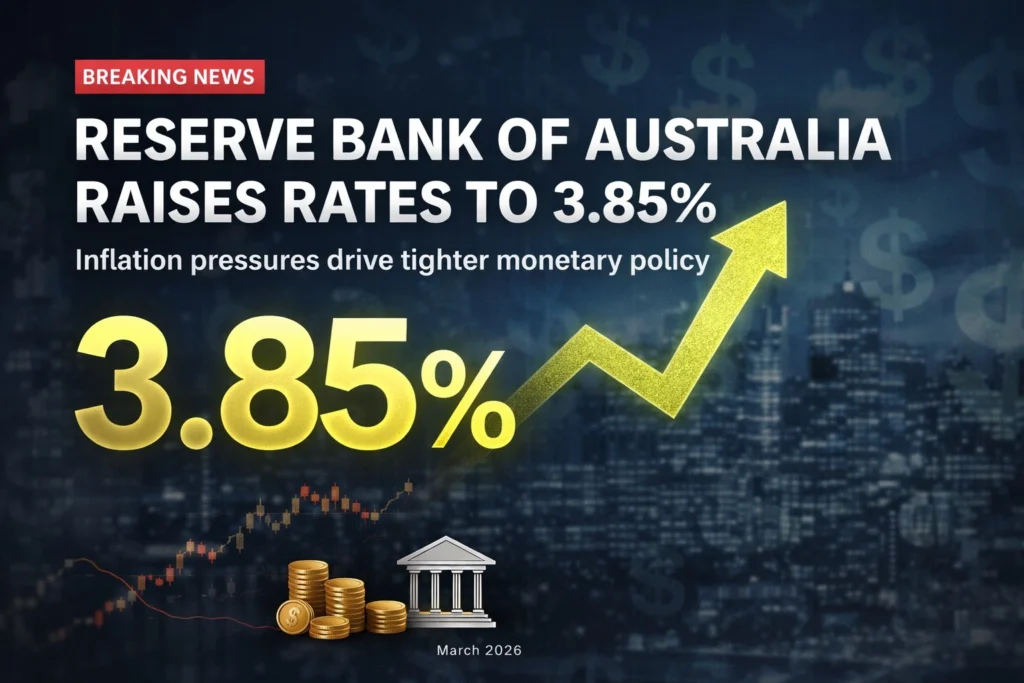
Australia’s central bank unexpectedly turned hawkish. On Feb. 3 the Reserve Bank of Australia (RBA) hiked its cash rate by 25 basis points to 3.85%, the first increase since 2024. Governor Michele Bullock noted inflation was still above the 2–3% target range and that the labor market was tight (unemployment ~4.1% in Jan). The move came despite markets expecting the RBA to hold. RBA board members stated inflation at 3.8% (Jan, trimmed mean) “is likely to remain above target for some time”.
Markets immediately priced in another RBA hike at the March meeting. Minutes and speeches reinforced that view: a day before the meeting, Bullock warned that March was a “live meeting” and that the board would “actively look to see if there’s a case to move more quickly” on rates, citing risks that Middle East oil shocks could rekindle inflation. She emphasized keeping inflation expectations anchored in face of a supply-driven price surge: “inflation expectations may start to move given likely supply shock from the Middle East conflict”.
Australia’s economy remains relatively strong with GDP up around 3–4% and robust wages; thus the RBA is now in a tightening bias. After this move, overnight indexed swap rates imply roughly one more hike by mid-2026. Borrowers and savers should expect higher rates at home, reflecting the RBA’s judgment that domestic inflation remains too high to cut immediately.
Pull quote: “Inflation is likely to remain above target for some time,” RBA Governor Bullock said after the Feb. meeting, signaling further tightening.