
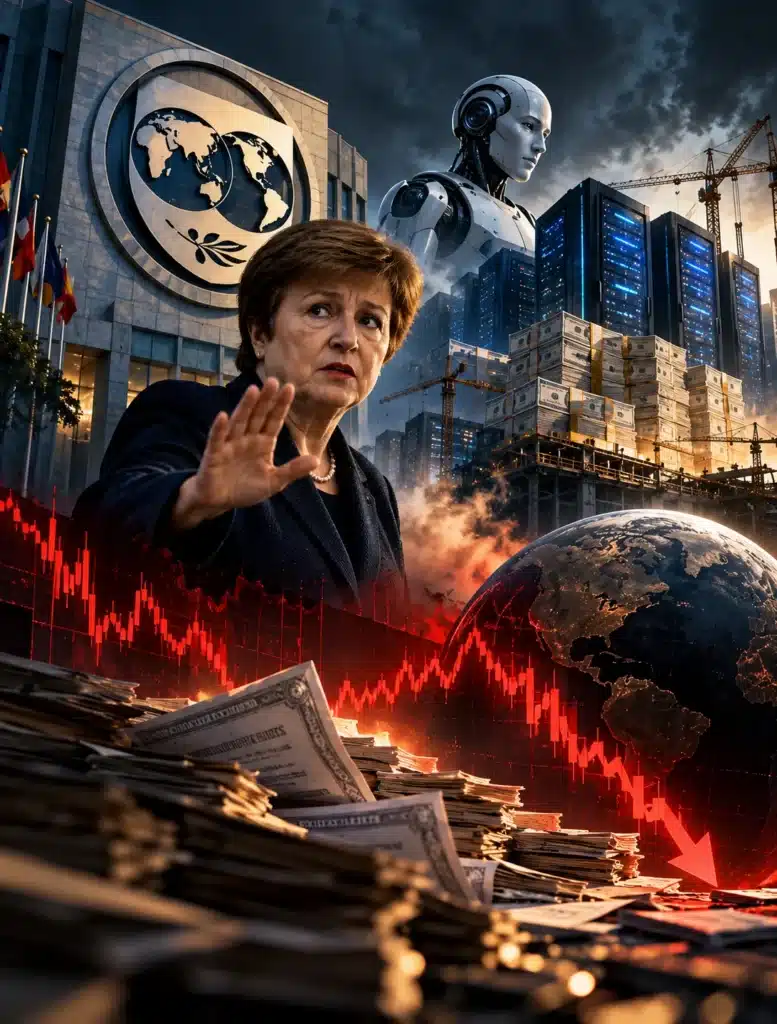
Bangkok this week is crowded. More than 18,000 delegates have shown up for the IMF and World Bank annual meetings, and on Tuesday the Fund dropped its latest Global Financial Stability Report into the middle of it. The message wasn’t subtle. Government bond markets, it says, could start moving in a disorderly way. Yields could jump sharply.
If you don’t follow markets, that probably sounds like somebody else’s problem. It isn’t. What governments pay to borrow sets the tone for mortgage rates, business loans, and the value of a lot of pension money. When that number shoots up, plenty of people feel it eventually.
What’s pushing yields up
They’re already high. In several rich economies they’ve hit levels not seen in decades. Two things are behind it, according to the Fund. Energy got more expensive because of the Middle East conflict, which pushed inflation back up. And now investors expect central banks to keep money tight for longer to deal with it.
Then there’s the debt itself. Public debt worldwide is close to its highest since the Second World War, and the IMF says it’s heading past 100% of global GDP. A government sitting on that much has to keep rolling it over, again and again, and every roll happens at whatever the market charges that day. Not a comfortable spot if prices swing hard.
A sharp rise in yields would hit other things too. Asset values would drop, AI-related ones included. Government bonds that banks and funds use as collateral would be worth less. The Fund said the impact could be severe, given how much of finance rests on these markets.
The AI part
I’ll admit this was the bit that surprised me. A bond report, and AI shows up in it.
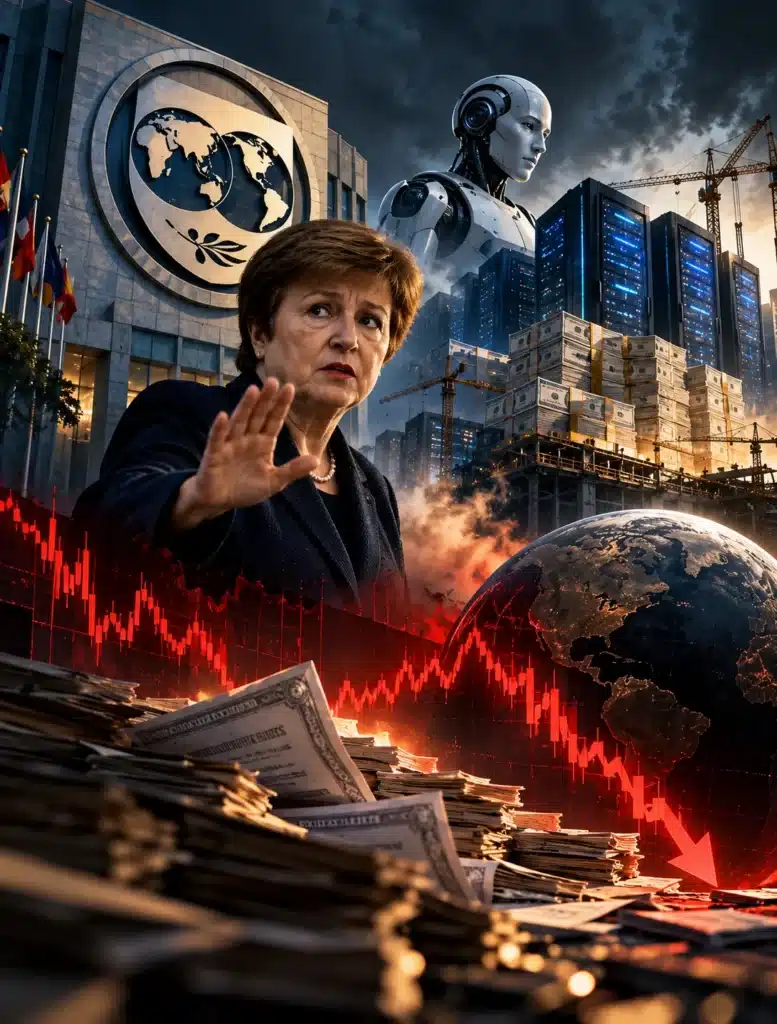
The big cloud and AI companies have been borrowing heavily this year. Hundreds of billions of dollars. The IMF says they now make up around 10% of global investment-grade bond sales, up from under 1% back in 2024. Much of that debt is long-dated, so it competes for the same buyers who’d otherwise take government bonds.
Pimco’s Marc Seidner added some perspective. AI-linked debt has become big enough to compete with governments for investor money, he said, but it isn’t what’s mainly driving yields. Worth remembering. The Fund is pointing to extra strain here. It isn’t saying AI caused the problem.
Hedge funds are holding more Treasuries
Another worry sits in the US Treasury market. Hedge funds owned roughly 4% of it in 2022. By 2025 that was about 9%, mostly through basis trades, which chase tiny price gaps and need borrowed money to be worth doing.
Some of that leverage has already been unwound, and short-term funding markets didn’t blink. That’s a relief. But plenty remains, and the IMF’s Caio Ferreira says the bigger problem is overlap. A lot of funds hold much the same positions. If one has to sell, others may have to follow, and the selling feeds itself.
Not everything in the report is gloomy. Trading in US, European and UK government bonds has held up fine so far. Japan is the odd one out, where liquidity keeps getting worse as volatility has climbed since it scrapped yield curve control. The Fund’s advice to governments is pretty simple: stretch out your debt maturities, and don’t lean too hard on short-term borrowing.
The circular deals
The section that stuck with me most is about how some AI firms are being financed.
Since 2023, the IMF counts 14 publicly disclosed deals where big cloud providers and others put about $300 billion of equity and $650 billion of debt into weaker AI companies. In exchange, they secured roughly $1.4 trillion in future revenue commitments. Think cloud services, chip orders, that sort of thing.
So money goes out, and on paper it comes back as sales. Jason Wu, from the Fund’s monetary and capital markets department, said those future revenue promises are what make these deals unusual compared with earlier ones.
The catch is that it all rests on one bet. If AI doesn’t earn money as fast as hoped, the equity stakes lose value, the debt gets harder to pay back, and the promised revenue may never show. Wu called it a “triple whammy.” And because the deals are bunched among a handful of companies, trouble at one could ripple to others.
So how worried should anyone be?
Probably not panicked. The IMF isn’t calling a crash. Reports like this are written to point at what could go wrong, so they always read like a list of worries. Plenty of these risks may never play out.
Still, put the pieces together. Record government debt, inflation pushing yields up, and AI companies pulling from the same pool of investor cash. That’s a lot of pressure on one part of the system. If you run a business that borrows, or you’ve got a pension, it’s worth watching how this goes over the next few months.