
Iran’s Message to Washington: The Strait Reopens in a Week, If You Do Your Part
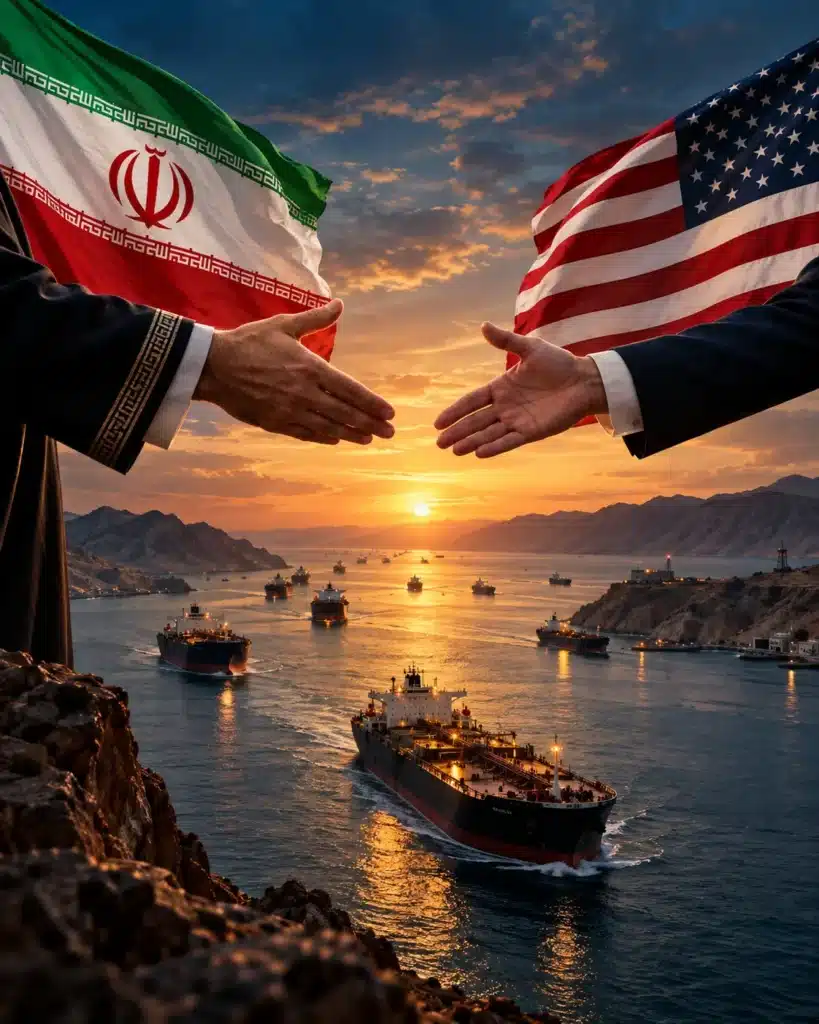
Abbas Araghchi didn’t mince words when he stood in front of reporters at the UN in New York this week. Iran’s foreign minister laid out something concrete — not a vague gesture toward peace, but an actual number. Seven days. That’s how long it would take, he said, to reopen the Strait of Hormuz, provided Washington holds up its end of a deal both sides technically already signed months ago.
Nothing New, Just Unfinished
Here’s the thing that’s easy to miss in all this: Araghchi wasn’t announcing fresh terms. He kept coming back to one point — everything Iran wants from the US is already sitting in the memorandum of understanding both countries signed back on June 18. He didn’t bother listing new demands because, in his telling, there was nothing new to list. The ball, as he put it, is entirely in America’s court now. The proposal reportedly reached Washington through Qatar, acting as go-between.
Ask him what specifically Iran expects, and he pointed back to that same 14-point agreement — a deal that, on paper, commits Iran to never building a nuclear weapon, ends military operations “on all fronts,” lifts the US naval blockade, provides sanctions relief, and has Iran making a genuine effort to keep commercial shipping safe through the strait while sorting out longer-term arrangements with Oman.
It sounded good in June. It didn’t last.
Why the June Deal Fell Apart So Fast
The MOU collapsed almost as quickly as it came together, once both sides went back to hitting each other militarily. Since then, Iran has been targeting vessels it accuses of crossing the strait without permission, while the US has struck Iranian sites in the strait itself along with tankers off Iran’s coast — on top of keeping that naval blockade running, which by most accounts has hit Iran’s economy hard.
Trump has claimed, on his end, that the US has actually managed to keep oil moving through the strait despite all this. The data backs that up only partially — Kpler, a commodities analytics firm, has tracked roughly 18 vessel transits a day on average recently, though that number has dipped as low as nine on some days. Reduced, not stopped. Somewhere in between “business as usual” and “closed.”
A War That Started With Air Strikes in February
For anyone who’s lost the thread of how this even started: the US and Israel launched air strikes on Iran back on February 28. Iran hit back — against Israel, against US bases in the Gulf, and against Gulf Arab countries allied with Washington — and shut down the Strait of Hormuz in the process. Roughly a fifth of the world’s oil and liquefied natural gas used to move through that strait before all this began, so its closure sent energy prices swinging wildly, and that instability hasn’t been contained to the region. It’s shown up at gas pumps well beyond the Middle East, which is exactly the kind of pressure that tends to matter a great deal to a president heading into Congressional elections this November.
Washington Isn’t Rushing, and Says So Plainly
A US official told the BBC that talks with mediators are ongoing and described as positive, touching on nuclear issues as well as the broader conflict. But the tone from that same official wasn’t exactly urgent — the US, they said, holds a strong position controlling the strait right now, so there’s no rush on Washington’s end to close anything.
That’s a notably different posture than Iran’s. Araghchi framed it almost as an ultimatum dressed up as an offer: if the US is serious, he said, everything is already in place to reopen the strait. The seriousness, in his framing, is the only missing ingredient.
Pezeshkian Adds a Nuclear Inspection Offer
Iran’s President Masoud Pezeshkian went further in a separate interview with CBS News, saying the ceasefire process would start the same day the US accepts it — essentially restoring things to how they stood under the Pakistan-brokered agreement, if Washington’s willing to go that route. He also said something that hadn’t been on the table quite this explicitly before: Iran would allow UN nuclear inspectors back into the country. He pushed back hard on the idea that Iran is building a weapon, but said inspections and agreements around that specific issue could be worked out as part of the broader talks.
Whether that offer holds up under actual negotiation is a separate question from whether it was a genuine signal or a bargaining chip. Right now, it’s hard to tell which.
Trump’s UN Speech Didn’t Soften Anything
If there was any doubt about how heated this has gotten rhetorically, Trump’s own UN General Assembly speech erased it. He framed the choice ahead in stark terms — either a deal that lets Iran rebuild into something bigger than before, or, in his words, driving the Islamic Republic toward annihilation, “quickly,” so it never gets another chance to cause the kind of damage he blames it for. He also predicted a deal would land right after November’s elections, not before — which, if true, undercuts a lot of the urgency Iran’s proposal was designed to create.
Araghchi didn’t let that comment pass quietly. He said Iran doesn’t respond to coercion or threats, and that peace, in his words, can’t be built out of threats of annihilation.
A Second Front Making Everything Messier
While all this plays out around Hormuz, there’s a second flashpoint complicating things further, on the other side of the Arabian Peninsula. Yemen’s Houthis — aligned with Iran — have ramped up attacks aimed at disrupting Saudi oil exports through the Red Sea, and this month they seized large, strategically important stretches of Red Sea coastline, including the port of Mokha, which sits right at the mouth of the Bab al-Mandab Strait, another critical shipping chokepoint.
That’s put pressure on Saudi Arabia specifically. US media reports have suggested Crown Prince Mohammed bin Salman has personally asked Trump for military support, and just this past weekend, the Saudi-led coalition in Yemen said it intercepted two ballistic missiles and drones the Houthis had launched toward Saudi territory.
None of that is happening in isolation from the Hormuz negotiations — it’s the same regional standoff playing out on a second coastline, and it’s making an already complicated set of talks even harder to untangle.
Where This Actually Stands
Strip away the rhetoric on both sides, and what’s left is this: Iran has put a specific number on the table — seven days — tied to conditions it insists were already agreed to months ago. The US has responded with cautious, noncommittal language and no apparent urgency. Trump has publicly floated annihilation as an alternative to a deal, while also predicting that any real agreement won’t happen until after the votes are counted in November.
Given how quickly the last agreement between these two countries fell apart, there’s good reason for skepticism that a faster timeline solves the underlying problem rather than just compressing it. This is a fast-moving, disputed situation with a lot of moving pieces across two different waterways — worth checking the latest reporting rather than treating any single account, including this one, as the final word.