
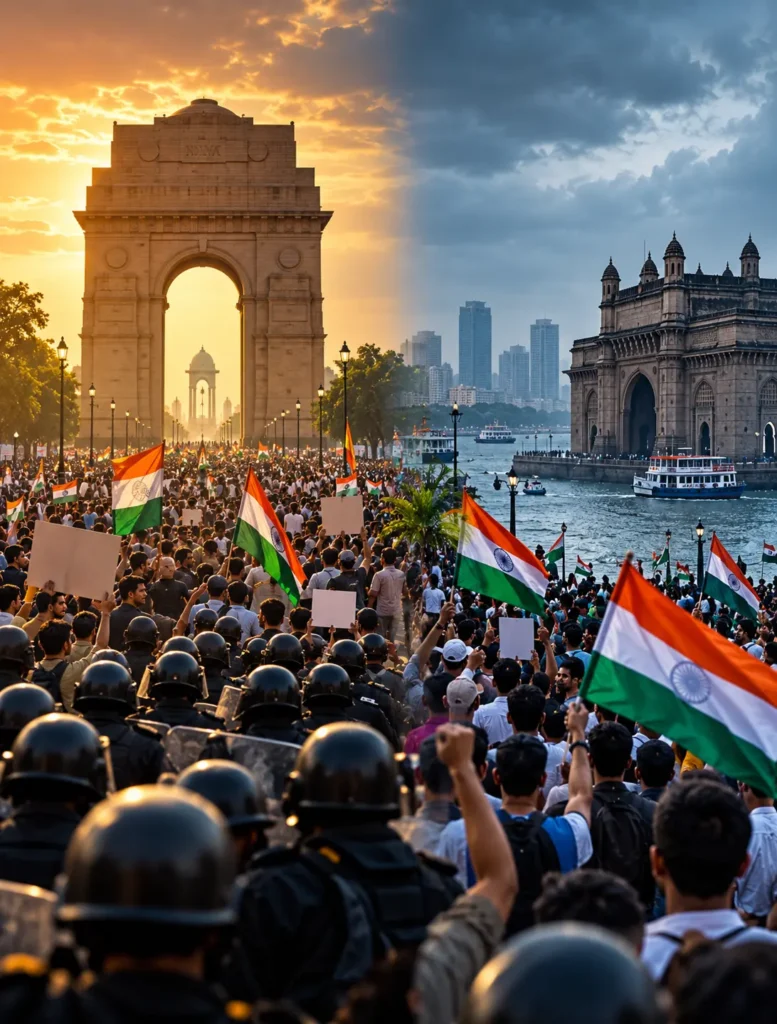
October 2 is usually quiet in India. Schools shut, offices close, people stop by Raj Ghat, the country pauses for a day to mark Gandhi’s birthday. Not this year. In two of the country’s biggest cities, thousands of people showed up — not to look back, but to demand something very specific happening right now: the resignation of India’s Chief Election Commissioner.
What’s Actually Behind This
Trace it back far enough and it comes down to one controversy. The Special Intensive Revision — SIR, as everyone’s shorthanding it — is a process the Election Commission has been running to clean up and update electoral rolls. Protesters say it’s resulted in large numbers of voters getting wrongly deleted, and they’re putting that squarely on Chief Election Commissioner Gyanesh Kumar’s desk.
The demands aren’t vague, either. Resignation, first. Some organizers are pushing further and want a criminal investigation into how the revision was actually carried out. Beyond that: freeze the 2025-26 voter lists instead of rolling them out, go back to the older rolls while this gets sorted, and change the law around how election commissioners even get appointed in the first place — less control sitting in any one branch of government, basically.
Delhi: Things Got Tense Fast
At Jantar Mantar, the scale was hard to miss. Numbers on exactly how many got detained shift depending which outlet you check — somewhere north of 500, some reports say past 700 — but every account agrees on the basic shape of it: Delhi Police moved in and detained a lot of people once the rally picked up heat.
Former Delhi CM Atishi was among them. So were AAP’s Sanjay Singh and Saurabh Bharadwaj. The moment those names got pulled into it, this stopped reading as a loosely organized civic protest and started looking like something with real political teeth behind it.
A lot of the actual organizing traces back to a newer outfit calling itself the Cockroach Janta Party — Abhijeet Dipke’s group — who’d billed this round as “Protest 2.0,” a follow-up to an earlier wave. They didn’t exactly fold after the detentions. Almost immediately, they announced another round at Jantar Mantar for October 10, with a blunt warning attached: that one happens if Kumar’s still in his seat by then.
Mumbai Ran Its Own Parallel Version
Delhi wasn’t alone in this. Shivaji Park in Dadar saw its own version play out, crowd estimates landing somewhere between three and four thousand people depending on who you ask. Security had already been stationed around the park well before the afternoon crowd built up — which tells you authorities weren’t exactly caught off guard.
Mumbai’s outcome looked different from Delhi’s, though. Instead of mass detentions, police filed FIRs — First Information Reports, the formal opening move on a criminal case — against the organizers, plus hundreds of unnamed participants. Whether any of that actually goes anywhere is genuinely unclear right now.
Why This Isn’t Just Another Protest Story
Worth stepping back for a second. Voter rolls, and whoever’s in charge of maintaining them, sit close to the actual foundation of how a democracy runs day to day. If enough people genuinely believe that process got mishandled, that’s not the kind of grievance that just fades out on its own — doesn’t really matter which side of the aisle is raising it.
That said, it’s worth being honest about what’s still just allegation here. The claims about improper voter deletions are exactly that right now — allegations, held strongly by protesters and opposition figures, but not something independently verified in putting this piece together. And the Election Commission’s own side of this — their response to the SIR criticism, their position on Gyanesh Kumar specifically — isn’t something the reporting gathered here covers in any depth. That’s a real gap. Anyone following this story closely should go looking for that side too, not just the protest coverage.
Where Things Actually Stand
As of these Gandhi Jayanti protests, Kumar hasn’t resigned. Nothing public suggests the government or the Election Commission plans to freeze SIR or revert to older rolls either. Delhi’s organizers have already set October 10 as a kind of deadline, so this clearly isn’t wrapping up as a one-day story. Mumbai’s legal cases add a second thread that’ll likely drag on for weeks.
What is clear: a day usually set aside for Gandhi’s legacy of nonviolent protest became, quite literally, a day of protest in 2026 — and that timing was almost certainly deliberate, not coincidence. Whether any of it actually moves the needle is still an open question. Given how fast this is still unfolding, it’s worth checking current reporting rather than treating this account, or any single one, as the final word.