
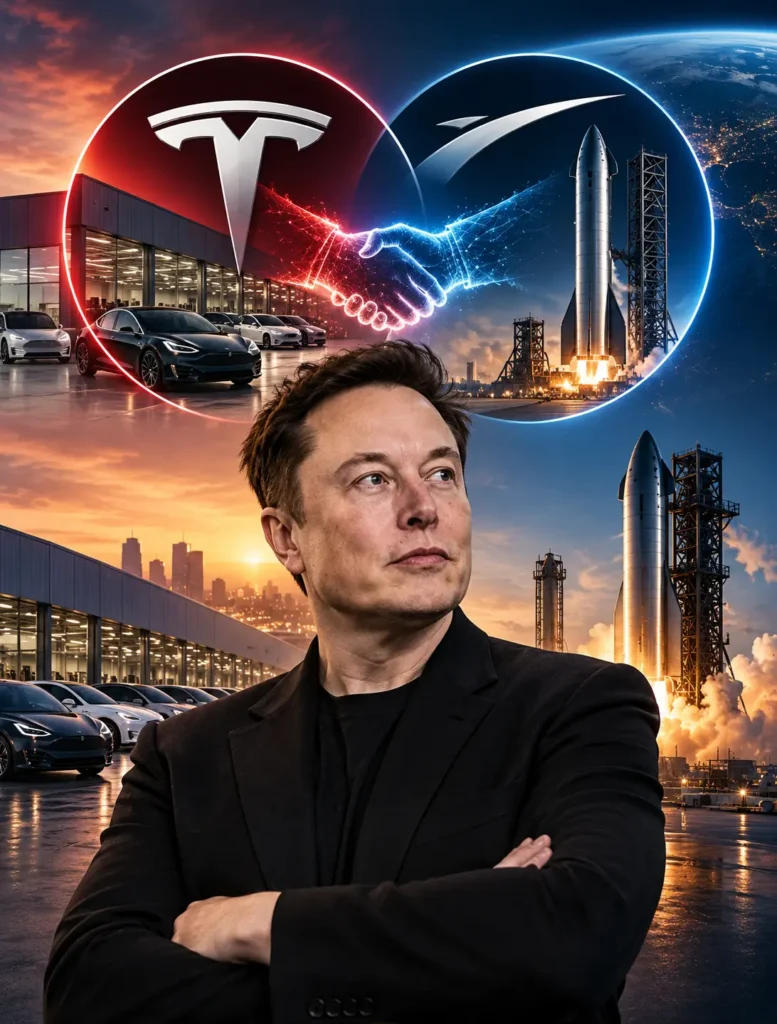
However, a newly revealed conversation with Elon Musk confirms that he is indeed actively considering merging his two flagship companies — Tesla and SpaceX. Musk said during a SpaceX investor earnings call that both companies had actually formed internal committees to review the possible deal.
Would I think it is a good idea? Yes,” Musk told analysts. “In my view, there is a lot of value to merging and a lot to be gained.”
Unprecedented Valuation and Financial Scale
The merger would create a mega-Corp unlike any seen before. Tesla’s market capitalization is approximately $1.5 trillion, and SpaceX sits at over $2 trillion after its recent initial public offering (IPO). The new entity would be one of the biggest mergers in corporate history.
SpaceX is still known more for its aerospace hardware and Starlink internet constellation, but it will rely on computing infrastructure (cloud resources) to keep its commercial engine humming along.
\Tech Partners provide $7.5 billion cloud compute revenue for SpaceX over Q3 after only reporting $813 million during the same period last year. Starlink’s quarterly revenue also grew to $5.2 billion. In total SpaceX has pulled in $27 billion in revenues for the year to date, buoyed by a quarterly profit of $4.4 billion recently, albeit with a minimal net (year-to-date) loss of $1.1 billion thanks to its rapid growth over that time frame
AI Synergies Drive Corporate Alignment
The theme of the proposed merger is based on deep technical synergies across AI, advanced software and custom silicon. Although Tesla may be best known for its work on electric vehicles, over the last few years it has slowly shifted its underlying mission towards autonomy, robotics and computing.
Both companies are already extensively partnered on Terafab, a cooperative semiconductor fabrication facility aimed at producing bespoke computer processors for Tesla robotic systems as well as AI infrastructure for SpaceX. Having the companies all operate under the same balance sheet would remove barriers to shared engineering resources, simplifying chip fabrication and allowing for common software frameworks.
High Regulatory and Investor Hurdles
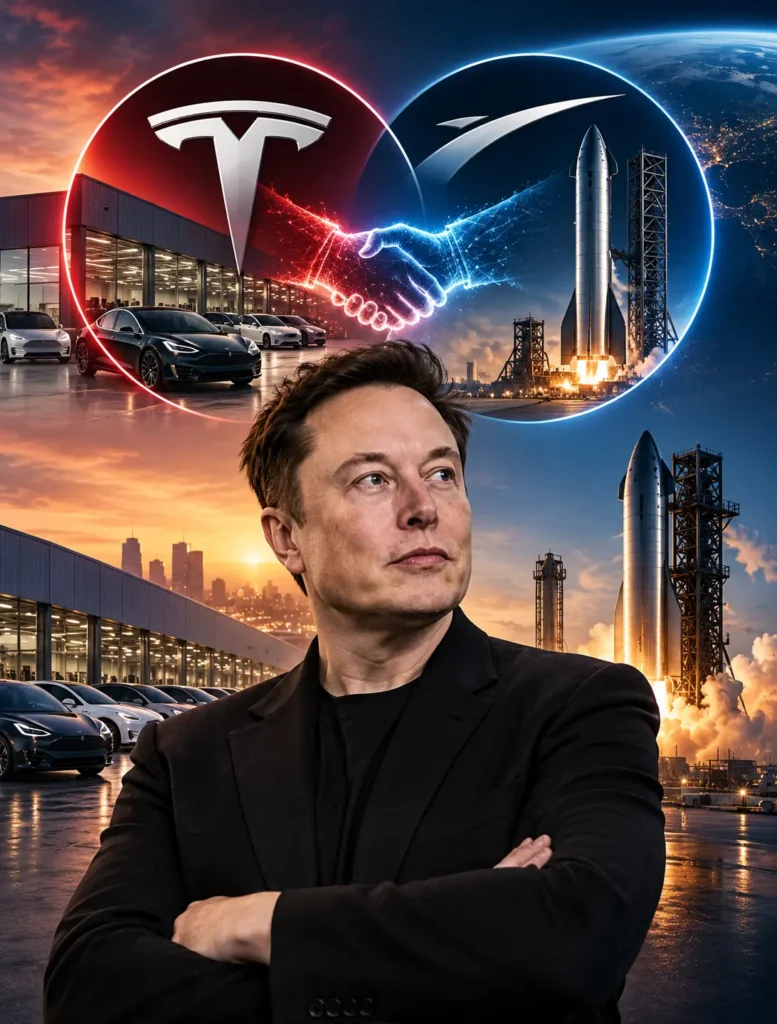
A two-layers merger is a complex legal and governance problem. Musk called the process “tap dancing through a minefield” and said he recused himself from both special committees because he is a “conflicted party” with dual roles as Chief Executive of both companies.
At the end of it all, the investors are the founders’ decision. For the deal to be approved, a majority of Tesla’s shareholders must vote in favor; Musk called that “a pretty high hurdle to clear.” However, investors have previously stood behind Musk’s long-term vision, approving a $1 trillion executive compensation package as recently as last year.
Consolidating the Musk Tech Empire
Partnering [with Tesla and SpaceX] makes sense for Musk as part of a bigger design to amortize his business kingdom. SpaceX acquired xAI and X (formerly Twitter) before going public.
The announcement received a warm welcome from Wall Street, with SpaceX seeing 8% growth in after hours for its shares, while Tesla stock jumped up nearly 2% ahead of its own earnings report.