
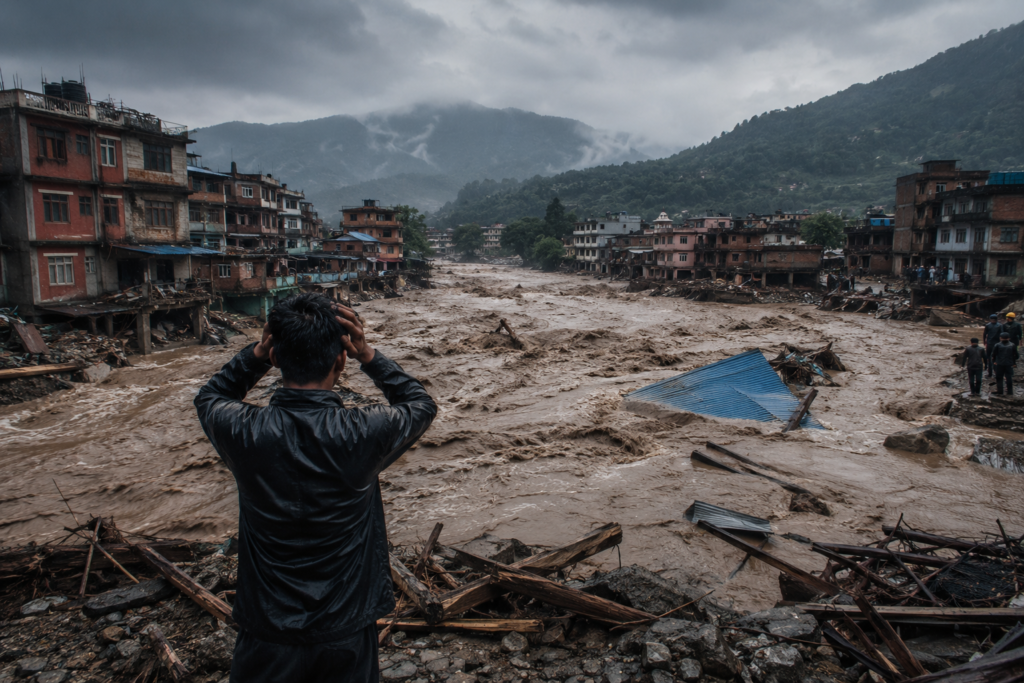
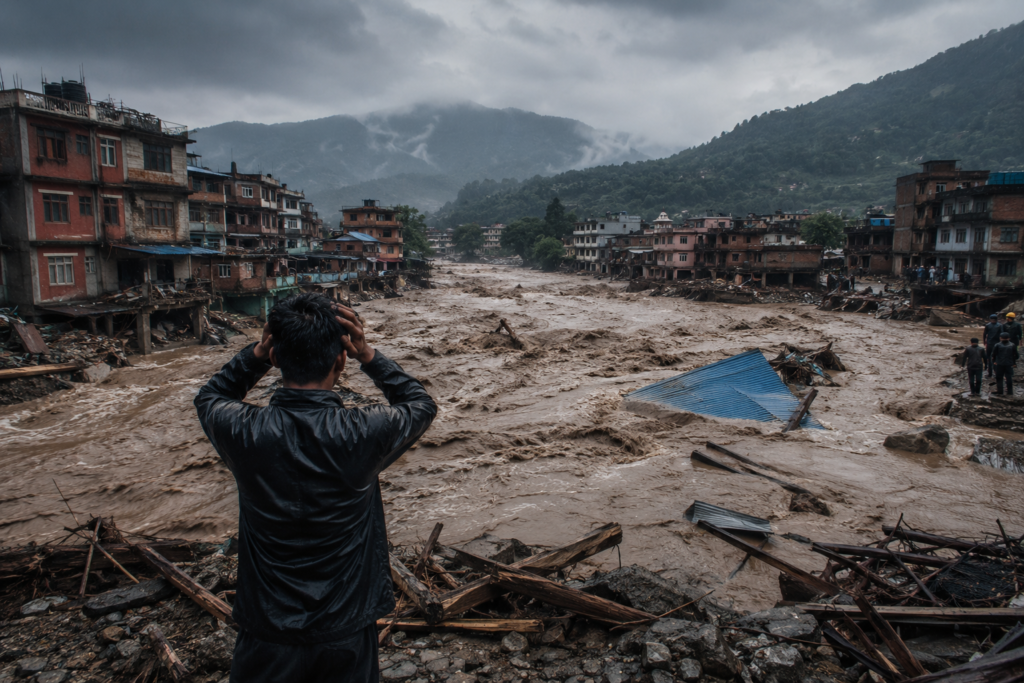
Nepal is reeling from flash floods and landslides that ravaged the Trishuli River valley on August 26. As of now, the death toll has climbed to 626 people with more than 2,400 people missing. Rescue operations are ongoing, and recovery teams are combing through the detritus of the disaster. However, the number of fatalities is expected to rise as rescue teams continue their efforts.
The cause of the disaster is believed to be a glacial burst that occurred in the Langtang Lirung area in the Himalayas. This triggered a chain reaction that sent a mixture of ice, rocks, and water racing down the Trishuli River valley at breakneck speeds for approximately 70 km. This explains why some of the victims have been found almost 240 km away in India beyond the Nepal border.
Border Gateway Inundated and Destroyed by Consequence of Floods
The disaster’s toll was not only felt by the locals and those in the vicinity of the river valley. On the China-Nepal border, the Gyirong Port complex has been completely destroyed by the floodwaters. For years, this vital trade route facilitated the movement of trade and tourism between the two neighboring countries. The border gateway has not seen such destruction since the Nepal earthquake of 2015.
In addition to the destruction of property, 7 people have lost their lives in the Chinese side of the border in Tibet. More than 554 people are missing as of the time of writing. In fact, the floods have triggered the formation of a barrier lake in two of the rivers along the border. The wall of water is said to contain about 2 million cubic meters of water and is likely to breach in the next few days. Chinese authorities have warned of potential additional flooding on the other side of the border.
Floods and Landslide Alert Issued for Additional Valleys in Nepal
Nepal’s government has issued a flood alert for the people living in Rasuwa, NuwaKot, Dhading, Gorkha, and Chitwan. These areas were at risk of experiencing additional landslides and flooding in the wake of the disaster. On the ground, the government teams are combing every nook and cranny of the said valleys to rescue any potential victims. This move comes after a state of emergency was declared in Rasuwa and NuwaKot following the closure of the highway.
The flood warning, which was issued on the 26th, is set to last until the 31st of August. This gives a fair indication of the expected impact of the barrier lake on the rivers on either side of the border. It also provides an insight into the possible length of the rescue operation that is currently underway, as mentioned earlier.
Aftermath of the Floods and Potential Impact on the Economy
Gladly, the loss of life and damage to property is not the main focus of this article. In the backdrop of such a horrific disaster, as it so happens, there are a number of other important issues that need to be addressed. In the immediate term, the closure of the Gyirong border post will have a significant impact on the trade route between Nepal and China in the short term. The impact on tourism, especially in the affected valleys, will also be felt for a considerably long period. This comes despite the Nepal government declaring holidays to assist the families of the affected people.
On the other hand, the long-term impacts of the disaster will most likely see increased demand for building materials, construction companies, logistics support, and insurance to cover the losses. In fact, the Nepal government is expected to spend significantly more on the rehabilitation of the affected areas than the damages that would have occurred if the floods were not to occur. The flood damage repair costs would most likely increase exponentially due to the increased demand for resources required for reconstruction.
However, none of this is of immediate concern. The top priority is the safety and rescue of the victims of the flood disaster. The economic impact will most likely come to light in the days and weeks that follow as the extent of the damage becomes apparent. To that end, the above analysis should help one understand the potential impact that the floods and landslides may have on the economy and, in turn, the stock price of companies that operate in this space.