
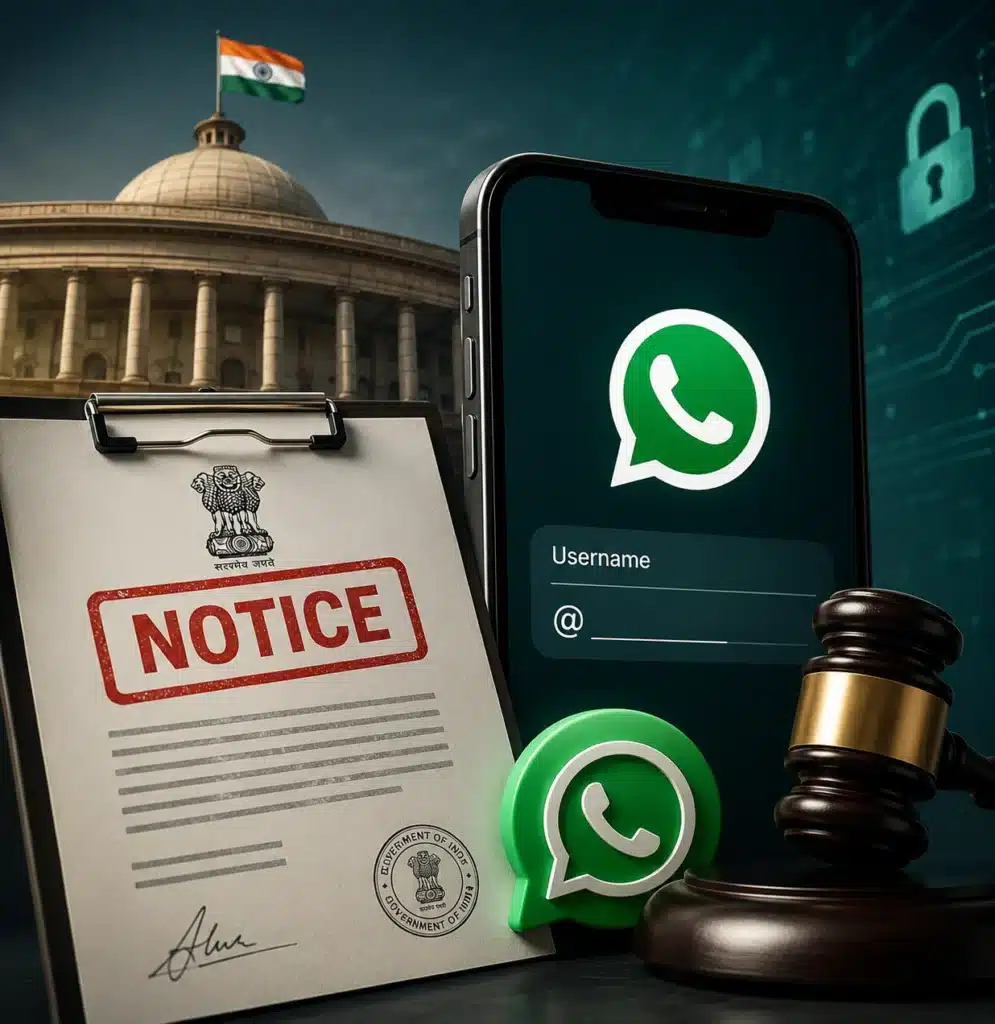
Government Issues Notice to Whatsapp Over Username Feature
The Indian government has issued a notice to WhatsApp regarding its upcoming username feature, raising concerns about user safety, cybersecurity, and the possibility of online fraud. The move comes after WhatsApp announced plans to allow users to communicate using usernames instead of sharing their phone numbers.
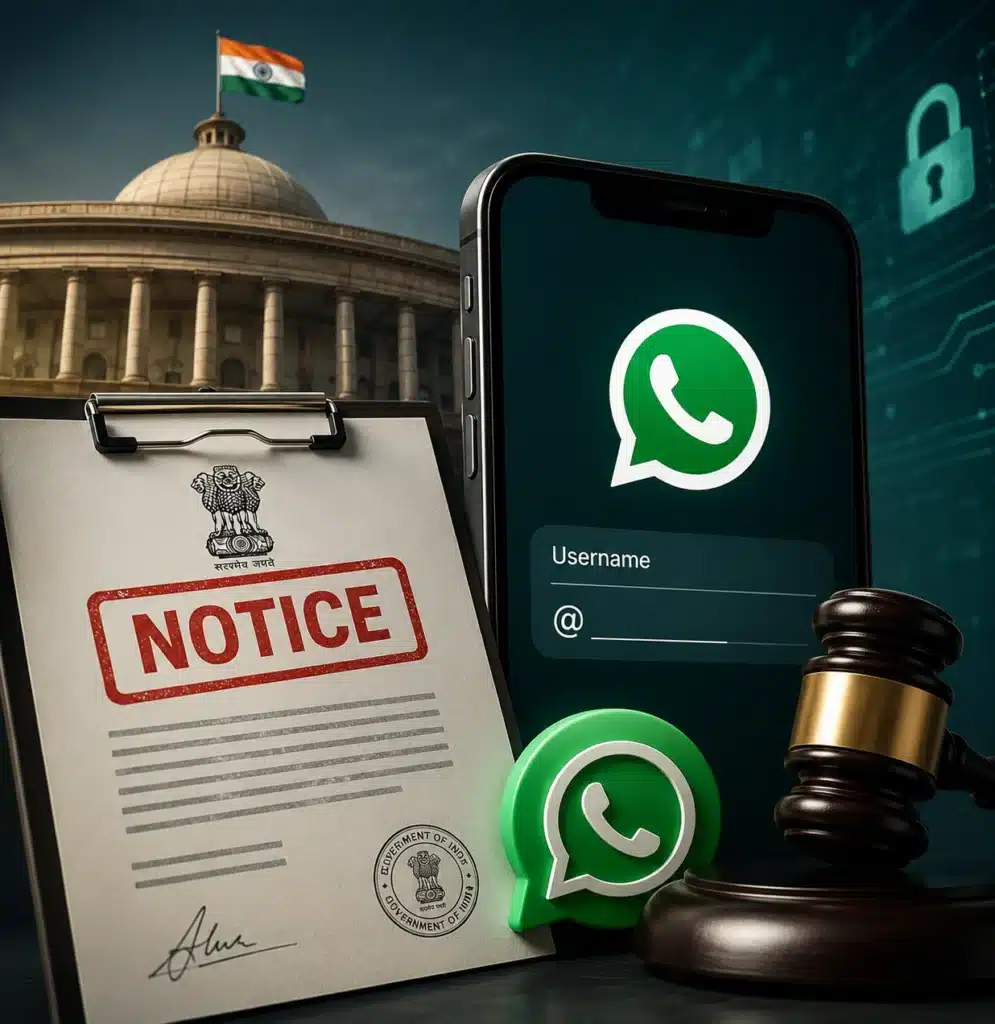
The new feature is designed to improve privacy by letting people connect without revealing their mobile numbers. Users will be able to create unique usernames, similar to handles on social media platforms, making communication more convenient and secure in certain situations. While this feature aims to strengthen privacy, Indian authorities believe it may also create new risks.
Government officials have expressed concerns that the username feature can be misused by cybercriminals. Fraudsters may create fake usernames, misuse it, impersonation scams and digital frauds could be there. Such misuse could make it harder for law enforcement agencies to identify and trace criminals.
As part of the notice, the government has asked Meta, WhatsApp’s parent company, to provide a detailed explanation of how the feature will function and what safety measures are in place to prevent misuse. Reports show that the company has been given three days to respond. Until consultations are complete, the government has advised that the feature should not be rolled out in India.
Whatsapp has defended the feature by stating that multiple security layers have already been built into the system.
What has Whatsapp said about it?
According to the company users will still need to login through their phone number to register on this platform, and additional safeguards will help prevent spam, fake accounts, and unwanted contact.
This development shows the growing tension between technological innovation and digital regulation. While privacy enhancing feature would not let scammers harm your privacy. The government will not compromise with public safety because of any technological changes.
The final decision on WhatsApp’s username feature in India may influence how future digital privacy tools are regulated, making this an important case for both technology companies and users alike.