
Lower Fuel Prices Today, Economic Challenges Tomorrow?
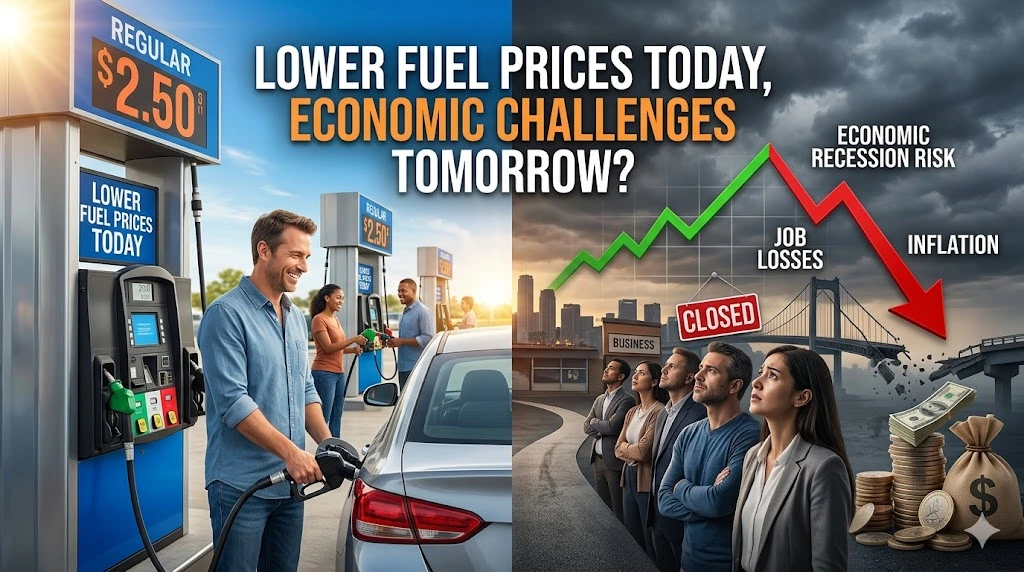
Lower Fuel Prices Today, Economic Challenges Tomorrow?
India has cut excise duty on fuel to protect consumers from surging global crude prices, it has led to “energy lockdown” that has been dismissed by the government.
Amid the global tension people are worried about the increase in price of the diesel and petrol. India has taken a different route in this: cutting taxes and absorbing the costs instead of passing them on to consumers. Now the question rises, whether it has helped to keep the petrol and diesel prices stagnant or not? what impact will it have on the economy?
Excise Duty Cut: Helpful for Consumers
To protect households from rising global fuel prices, the governmen thas reduced excise duty on petrol and diesel by Rs 10 per litre.
The central excise duty on petrol has been reduced to ₹3 per litre, while diesel is currently exempt from any central excise duty.
This move has helped to keep retail fuel prices stable and it would cost around $70 per barrel to nearly $122 per barrel.
What have oil marketing companies decided?
At the same time oil marketing companies are facing under recoveries of around Rs. 24 per litre on petrol and Rs. 30 per litre on diesel.
Why India chose this route?
If we look across the world many countries have passed on higher fuel costs to consumers, with prices rising by 30-50% in some regions. While India has opted to absorb part of the impact to protect households from sharp shocks.
This strategy will help in maintaining consumption levels and prevent a sudden rise in inflation.