
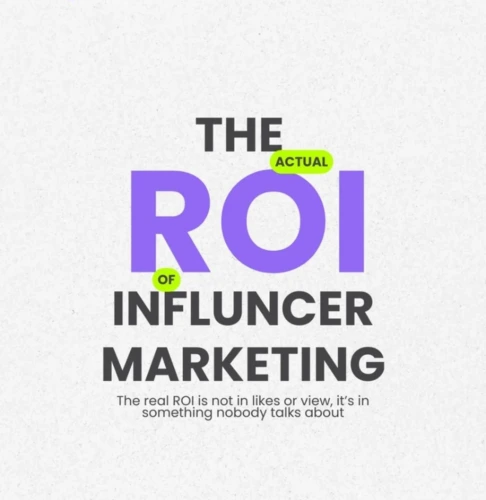
What is Influencer ROI: Are CMOs missing it?
In today’s digital-first marketplace, influencer marketing has become very popular and important for brand visibility. From product launches to customer engagement, brands are focusing on shaping consumer decisions by advertising. Even after increasing the budget, the CMOs feel struggle to measure the real return on investment (ROI) from influencer campaigns. The problem is never the strategy. It is the way people believe success should be.

Know the reason behind it:
The Problem With Vanity Metrics
One of the biggest mistakes CMOs make is focusing too much on vanity metrics such as likes, shares, and follower counts. While these numbers may look impressive in reports, they do not always translate into actual business growth.
A creator with millions of followers may get high engagement but little impact on conversions and cosumer trust. On the other hand, a niche influencer with a smaller but highly loyal audience can deliver stronger sales results. The key is not popularity but relevance and authenticity.
ROI is important than sales
Many companies expect influencer campaigns to show instant sales results. Awareness, customer trust, long-term loyalty are also valuable outcomes.
For example, a campaign may not generate immediate purchases but it could significantly improve brand recall or website traffic. Consumers take time before buying any product. It is especially for products or B2B services.
The CMO’s should not only worry about short-term revenue can lead to underestimate the long-term value influencers bring to brand positioning.
Another overlooked issue influencer-brand mismatch. Many CMOs partners with creators because they are trending or have a large audience. However, if the influencer’s content style, audience or values do not align with the brand, campaigns often fail.
Choosing the Wrong Influencers
Successful influencer marketing depends on strategic partnerships. Brands should evaluate audience quality, engagement authenticity, industry relevance, and content consistency before collaboration.
Sometimes, micro influencers perform celebrities becuase they have stronger trust with specific communities.
Data and Attribution plays an important role
To truly understand ROI, CMOs must invest in better tracking systems. Unique discount codes, affiliate links, UTM tracking, and customer surveys can help identify where conversions are coming from.
Without proper attribution, influencer marketing becomes guesswork rather than strategy.
Proper strategy is required to get influencer marketing on tracka and understand what audience wants from you.
Influencer marketing is but many CMOs are still using old methods to work on it. Real ROI goes beyond likes and impressions — it is about meaningful engagement, trust, and measurable business impact. Brands focuses on relevance, long-term value, and smart data tracking to under influencer partnerships than chasing data and numbers.